
 0481 569 566
Problem
Cracked Concrete
You might see thin hairline fractures running across the surface, or wider, jagged cracks where one side has lifted up to create an uneven trip hazard. Look closely. Sometimes they follow the control joints, but they can also branch out randomly across your driveway or path in a jagged web.
Common causes
- Slab shrinkage during the original pour and drying process
- Ground movement or soil settling beneath the concrete slab over time
- Heavy vehicles parking on concrete that wasn't poured to handle that weight
- Inadequate control joints to relieve natural stress in the concrete
What it may mean
Thin hairline cracks are usually cosmetic and can be sealed easily to prevent water ingress. They are simple to fix. If one side of the crack is higher than the other, or if the gap is actively widening, it points to subgrade settling or structural shifting.
What Atlas may do
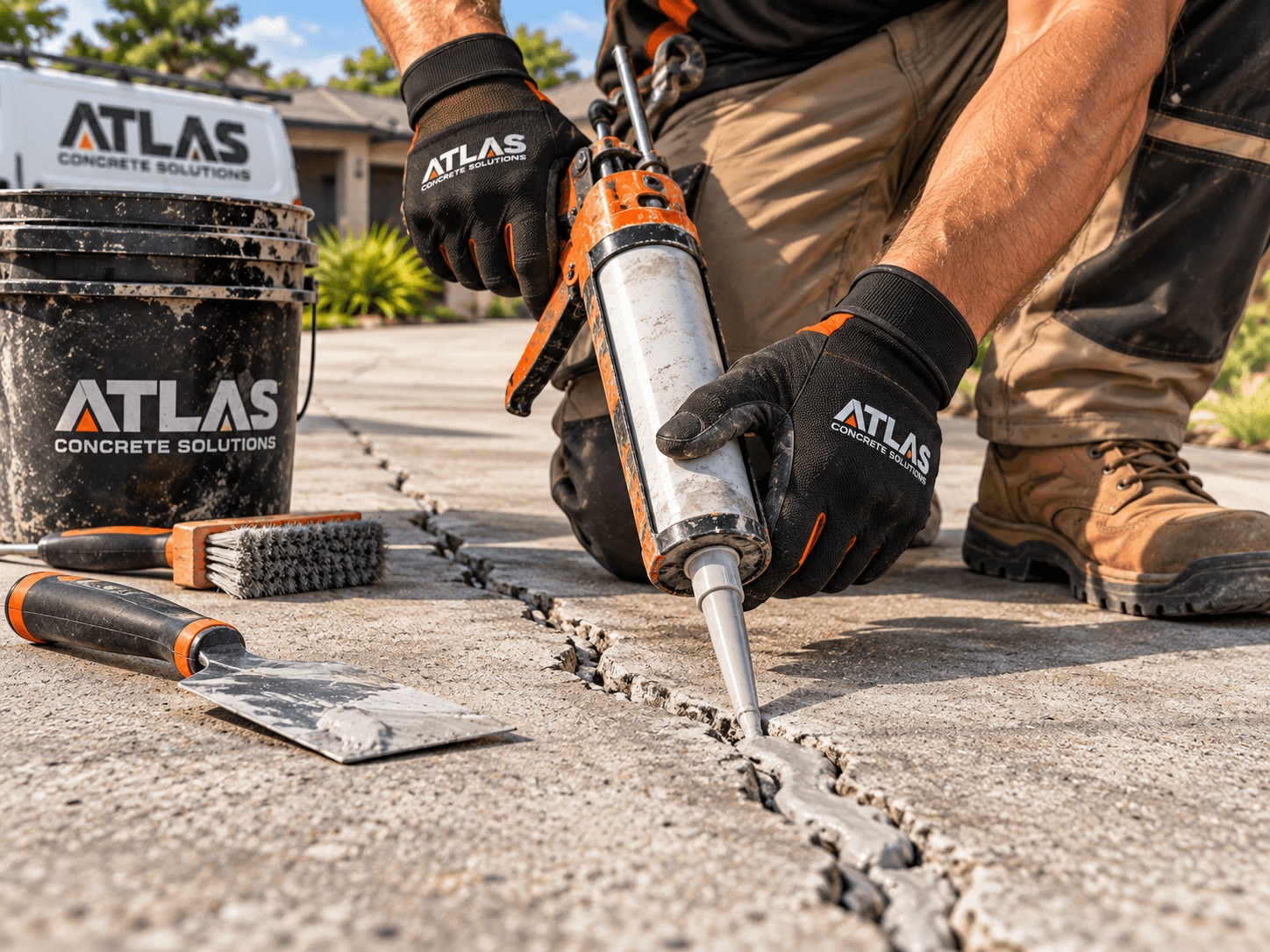
We grind them first. To ensure a permanent bond that stops water from seeping under the slab, we grind out the crack to clean the edges before injecting a high-strength repair mortar. Once that has fully cured, we sand the patched area completely flush with the rest of your slab.
When to get it checked
You should get a professional assessment if the crack is wider than a couple of millimetres, or if the concrete slabs have started to become uneven.
Not a diagnosis
This is general information only. Atlas needs to assess the slab before confirming the right approach.
We fix them properly. We use a specialized grinder to open up the crack and clear the dust before injecting high-strength epoxy resin or polymer fillers deep into the structural gap. Our repairs hold tight.